Dirt bikes are forgiving, light and torquey — which makes them a brilliant place to learn wheelies. This beginner guide walks through the technique and the safest way to practise it.
Why dirt bikes are beginner-friendly
Light weight, low gearing and predictable power make dirt bikes some of the best bikes to learn on. They loft easily in first or second gear and are cheap to maintain if you do drop one.
Ready to build one?
Skip the guesswork — get the complete step-by-step build plans.
Get The Plans — $59Body position first
Sit back slightly, keep your arms relaxed, and stay centred over the bike. Tension is the enemy — stiff arms cause the jerky, short wheelies that frustrate beginners. The same body position carries over when you move up to a road bike: see how to wheelie a street bike.
Clutch vs. power lift
For control, learn the clutch wheelie first: roll in second gear, dip the clutch, add throttle, and release to loft the front smoothly. Once that's comfortable, a power wheelie is just a sharper version. Either way, the goal is the same balance point.
- Roll on at a steady speed in a low gear.
- Cover the rear brake with one finger or foot — always.
- Loft smoothly toward the balance point.
- Hold with small inputs — tiny throttle and brake adjustments.
- Tap the rear brake the instant the front feels too high.
The rear brake is your safety net. If you only learn one habit, make it covering the brake.
Practise without the crashes
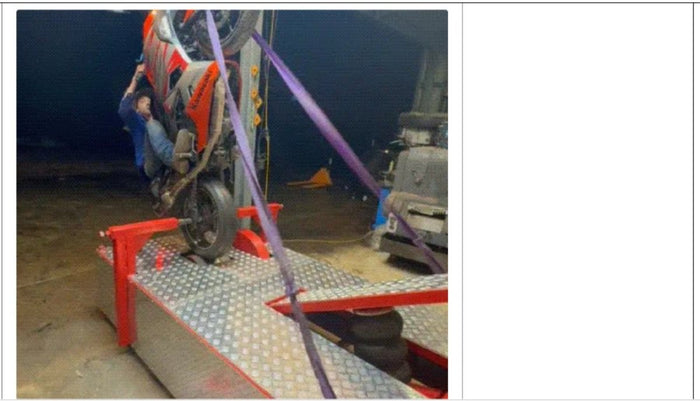
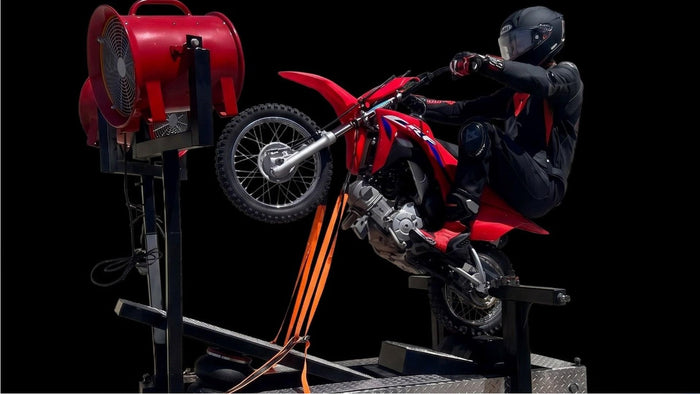
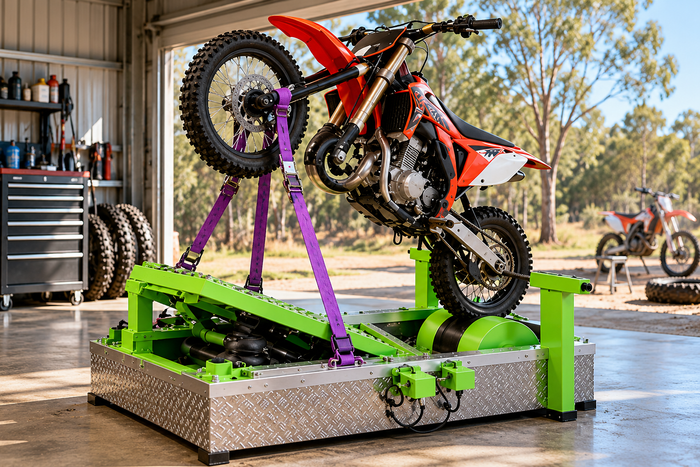
The catch: getting enough reps on dirt means a lot of risk. A DIY wheelie machine lets you drill the balance point stationary, then take that muscle memory to the trail. It's how riders skip months of trial and error. Build your own trainer with our step-by-step plans and start drilling this weekend.
Build your own wheelie machine
Put this into practice. Get the complete DIY plans — instant download, fits any bike, 6-month guarantee.
See The Plans →