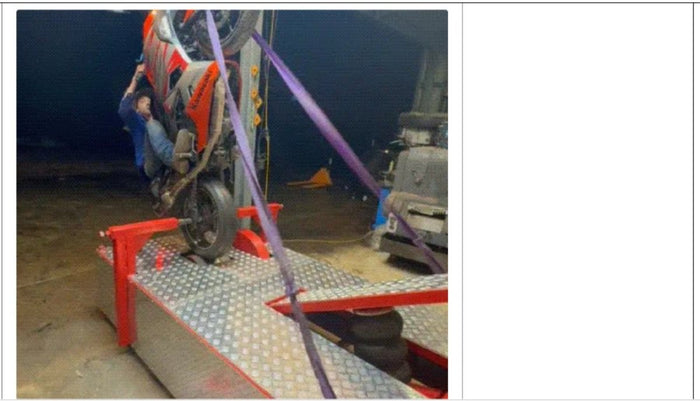
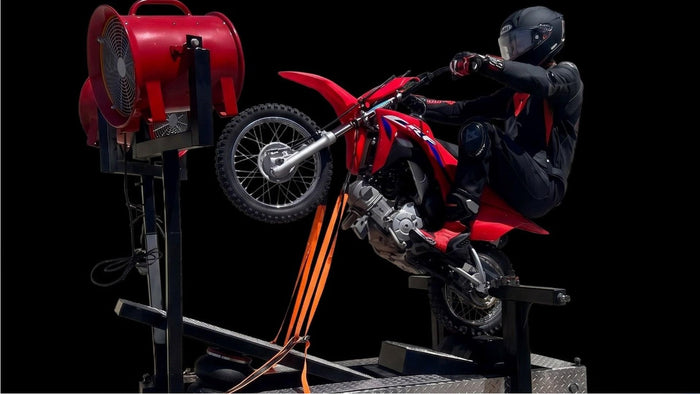
Every rider wants to hold a clean wheelie. Almost nobody wants the loop-outs, bent subframes and ER visits that usually come with learning. The good news: you can skip all of that. Here's how to learn to wheelie safely, step by step.
Why most riders crash learning wheelies
The classic mistake is trying to learn on the street, on your real bike, with no way to fail safely. You give it too much throttle, panic when the front comes up, and either slam it back down or loop out the back. One bad rep can cost thousands in repairs — or worse.
The riders who progress fastest remove the fear from the equation. They practice in a controlled environment where a mistake costs nothing. That's exactly what a wheelie machine is for.
Ready to build one?
Skip the guesswork — get the complete step-by-step build plans.
Get The Plans — $59Step 1: Train the balance point first
A wheelie isn't about bravery — it's about finding and holding one balance point. On a wheelie machine you can roll the bike up to that point again and again until your body memorises it, with zero risk of going over backwards.
We cover this in depth in how to find the balance point, but the key is reps. Hundreds of safe reps build the reflex that no amount of street courage can.
Step 2: Master the rear brake
Your rear brake is the single most important control for safe wheelies. A light tap instantly drops the front — it's your "undo" button. Learn to cover it at all times. We dedicate a whole guide to it: the rear brake, your #1 safety tool.
Step 3: Smooth, not aggressive
- Throttle: roll it on smoothly — don't stab it.
- Clutch: a small, controlled slip lifts the front predictably.
- Body: stay relaxed and centred; tension makes you jerky.
Step 4: Build the muscle memory before you hit the road
By the time you take the skill to the street, the wheelie should already feel automatic. That's the whole point of training on a machine first — you arrive confident, not terrified.
Train the reflex safely, then ride. That order is the difference between progress and a repair bill.
The safest way to start
You don't need a commercial rig to do this — commercial machines from other sellers are often one size and not adjustable, and freight is extra. You can build your own trainer at home for around $1,500 in materials, depending on your local prices. See the cost breakdown or jump straight to our complete build plans.
Build your own wheelie machine
Put this into practice. Get the complete DIY plans — instant download, fits any bike, 6-month guarantee.
See The Plans →