There are two main ways to lift the front wheel: a power wheelie and a clutch wheelie. Beginners often wonder which to learn first. Here's the difference and our recommendation.
Power wheelies
A power wheelie uses throttle alone — you roll on hard enough that the torque lifts the front. It works well on torquey bikes but gives you less precise control over exactly when and how fast the front comes up, which can catch beginners out.
Ready to build one?
Skip the guesswork — get the complete step-by-step build plans.
Get The Plans — $59Clutch wheelies
A clutch wheelie uses a controlled clutch slip to pop the front up at lower speed. Because you're releasing stored drivetrain energy in a controlled way, you get a more predictable, repeatable lift — and you can do it at speeds where a power wheelie wouldn't happen.
Which should you learn first?
For most riders, the clutch wheelie is the better starting point. It's more controllable, works on more bikes, and teaches precise inputs. Once you own the balance point, the power wheelie becomes easy to add.
| Clutch wheelie | Power wheelie | |
|---|---|---|
| Control | High | Moderate |
| Beginner friendly | Yes | Less so |
| Works on low-torque bikes | Yes | Harder |
Learn the clutch wheelie first for control, then add power wheelies once balance is second nature.
Drill both safely
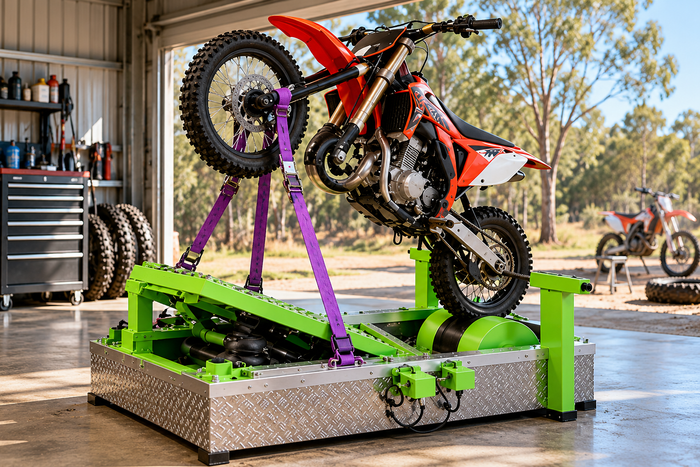
Whichever you practise, do it on a DIY wheelie machine first so a mistake costs nothing. Combine it with balance-point training and the rear brake reflex, and you'll progress fast. Ready? Get the plans.
Build your own wheelie machine
Put this into practice. Get the complete DIY plans — instant download, fits any bike, 6-month guarantee.
See The Plans →