It's the first question every rider asks: is training on a wheelie machine actually safe? The short answer is yes — far safer than learning on the open road. Here's why, and what makes the difference.
Why a machine is safer than the street
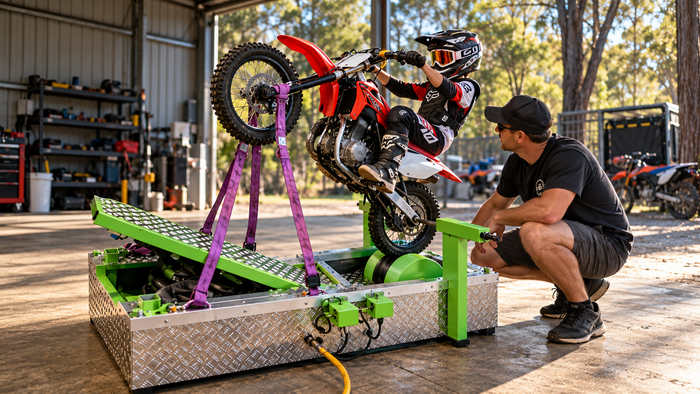
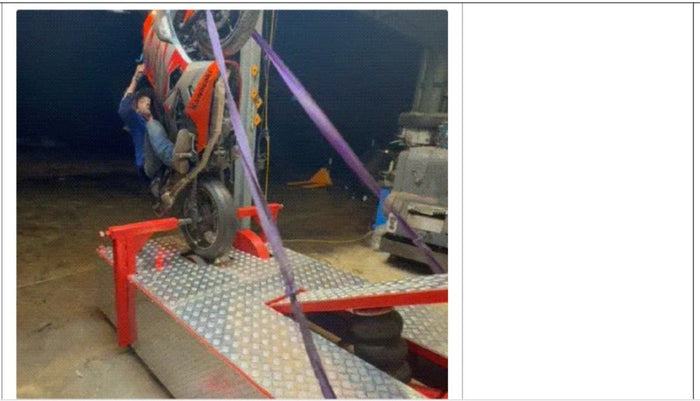
On the road, every attempt risks a loop-out, traffic, gravel and tickets. A wheelie machine removes all of that. The bike stays in one place, the rear wheel spins on a roller, and the rear brake plus safety straps catch any mistake before it becomes a crash.
Ready to build one?
Skip the guesswork — get the complete step-by-step build plans.
Get The Plans — $59The safety systems that matter
- Anti-loop straps physically prevent the bike from flipping past the balance point.
- Adjustable resistance lets total beginners start gentle.
- A planted, stable base (with jack stands) keeps the machine rock-solid.
- Cover the rear brake — the single habit that stops a loop-out instantly.
It's only as safe as the build
This is the key point: safety comes from a correct build. A rig with a weak frame or skipped straps is dangerous. That's why following measured build plans matters — they're engineered around the safety features, not guesswork.
The machine doesn't make you fearless — it makes mistakes harmless, so you can practise enough to get good.
Smart riding habits still apply
Wear your gear, start slow, and if a young rider is training, see our wheelie machine for kids guide first. Learn the balance point gradually. Avoid the common mistakes and the machine does exactly what it's designed to: let you build real skill without the hospital risk. Ready to build a safe one? Grab the complete build plans and get started this weekend.
Build your own wheelie machine
Put this into practice. Get the complete DIY plans — instant download, fits any bike, 6-month guarantee.
See The Plans →